

Before I tell you all about the awesome ways to use marketing calendars and planners to boost your marketing strategy – how about we play a quick game?
I’ll give you a 100%-real existing holiday, and you try to guess the date when it is celebrated.
If you answer correctly – consider you’ve had yourself a conversion. But if you couldn’t get it quite right – well, I guess you’ll have to keep reading!
I’m kidding, keep reading anyway 😉
Ready? No mid-read googling!

👉 World Typing Day? ………………………………………………………………… January 8!
👉 Global Recycling Day? ………………………………………………………………………………… March 18!
👉 International Creator Day? …………………………………………………………………………. April 23!
👉 Digital Nomad Day? …………………………………………………………………………. August 8!
👉 Project Management Day? ………………………………………………………… November 7!
How many did you get right?
Let me guess.
Even though you recognize the value of your customer support and design team members; even though you believe that everyone deserves to be paid equally for their qualifications; and even though you are at least partially guilty of working from a semi-remote location and writing a sentence or two in all-caps every now and then – these holidays aren’t exactly on your radar.
Which is perfectly fine! I wouldn’t have the slightest idea about them either unless I used a proper marketing calendar.
What is a marketing calendar?
Well, I say “marketing”, but what I really mean is a year-round calendar template of all celebrations, occasions, and remembrances for you to concentrate your marketing strategy, social media posts, sales pitches, and even HR gatherings around.
Sounds pretty cool, doesn’t it?
Who needs a marketing calendar
You might have heard about editorial marketing calendars, content marketing calendars, or social media marketing calendars. You might have even prepared or used one. After all, there are tons of readily-available free marketing calendar templates online!
But using multiple calendars, endless templates, and personal task lists can be overwhelming.
So what if I told you you can have all your business, employer branding, and marketing efforts in one place? With the right marketing calendar template, you can have your cake and eat it too!
- Your entire marketing team can plan and schedule the most important activities deep into the future
- Your social media campaigns can engage with the audience over a holiday-driven heart-to-heart
- Your team building events can turn from a boring annual must-have into an exciting and memorable celebration
- Your ecommerce business goals can be achieved faster because you’ll know the dates people are most likely to purchase gifts
… and so much more!
DOWNLOAD OUR GLOBAL MARKETER’S CALENDAR FOR FREE!
So yeah, it’s safe to say that a detailed marketing calendar is more than just a schedule of dates to help you plan your marketing activities around. Say you work in SaaS industry and summer is the slowest season of them all. Our Calendar can help you break the routine with some unexpected events and agendas.
Or, alternatively, you can check out our podcast and learn how to put slow season to a good use:
It’s a navigator that can shape the course of your strategy for the entire year across multiple channels and different teams!
A quick disclaimer: we use the terms “marketing calendar” and “marketing planner” interchangeably throughout the article to refer to the spreads with pre-filled celebrations, remembrances, and observances, as well as your own marketing projects and campaigns you could be adding to the holiday-driven layout.
Now let’s take the next year as an example.
Most important dates in 2024 and 12 examples for all marketing channels
The full version of our own marketing calendar template has over 300 occasions to build your marketing initiatives around. For now, let’s just focus on the most important dates to look forward to in 2024.
Author’s note: You’ll notice that there are examples of marketing campaigns presented after each month. But it’s boring to spend too much time on well-known ideas for a holiday marketing plan like “Send a “Happy New Year!” email to your customers!”
Instead, these sections are dedicated to lesser-known out-of-the-box employer branding and marketing activities for you to get a better idea of the purpose of this marketing calendar.
January

The first month of the year is a perfect time to revisit your marketing strategy and create a marketing calendar for the year.
January is the Get Organized Month, Veganuary, and Dry January, among other things. Make sure to reflect that in your marketing campaigns!
- January 1 – New Year’s Day
- January 1 – Polar Bear Plunge Day
- January 2 – Day After New Year’s Day
- January 8 – National Clean Your Desk Day
- January 15 – Martin Luther King Day
- January 24 – International Day Of Education
- January 29 – National Puzzle Day
💡 Marketing campaign idea: During the first weeks of January, most people are just coming back to the office from holidays, sorting through the upcoming projects, and returning to extensive campaign planning. A marketing calendar makes a perfect opportunity for you to reconnect with the entire team and get on the same page as early on as January 8 over the National Clean Your Desk Day!
February

It’s the middle of Q1, which means that you should have your marketing goals in place, and now is the time to use your marketing calendar to plan some campaigns!
In February, we celebrate Black History Month.
- February 1 – World Hijab Day
- February 2 – Groundhog Day
- February 4 – World Cancer Day
- February 10 – Lunar New Year
- February 11 – Super Bowl Sunday
- February 14 – Valentine’s Day
- February 17 – Random Acts of Kindness Day (U.S.)
- February 24 – Floating Lanterns Festival
- February 27 – World NGO Day
💡 Marketing campaign idea: February 22 is the World Thinking Day which makes it a perfect opportunity to connect with your audience over a webinar and review some of the newest/least used features of the product or service your business is offering. Don’t forget to include a Q&A session at the end of your webinar – 92% of attendants count on it!
March

It’s time to take a short break between the winter holidays and Easter and let your marketing teams catch their breath.
March is the Gender Equality Month.
- March 1 – World Compliment Day
- March 8 – International Women’s Day
- March 17 – Saint Patrick’s Day
- March 21 – International Day for The Elimination of Racial Discrimination
- March 23 – Earth Hour
- March 25 – Holi in Hindu tradition
- March 31 – Easter Sunday
💡 Marketing campaign idea: March is the perfect month to let your customers know you care about them beyond profit. Daylight saving time is still very much a thing (unfortunately), so this can be a great opportunity for you to remind your newsletter subscribers they’ll have an hour less to sleep, party, or work that night. In the U.S., DST falls on March 10, while in Europe, it begins on March 31 this year – don’t forget to segment your contacts here!
April
I hope your marketing calendar is ready, for there are lots of opportunities for creative marketing activities this April!
April doesn’t simply mark the beginning of Q2; it also celebrates Diversity Month, Earth Month, and Stress Awareness Month!
Tip: If you’re struggling with the latter, having an international digital marketing calendar can help you take some of the stress away from campaign planning.
- April 1 – April Fool’s Day
- April 2 – World Autism Awareness Day
- April 4 – 404 Day
- April 5 – National Self Care Day
- April 6 – National Employee Benefits Day
- April 7 – World Health Day
- April 9 – Eid Al-Fitr
- April 15 – Tax Day (U.S.)
- April 27 – World Design Day
💡 Marketing campaign idea: April 4 is the 404 day in the digital community, so it’s a perfect opportunity to stand out from the crowd and jest around instead of April Fool’s Day. You don’t need to go super techy with this campaign – even a simple popup would do. But a small good-natured joke like this could put a smile on your website visitors’ faces and improve your customer retention rates a little.
May
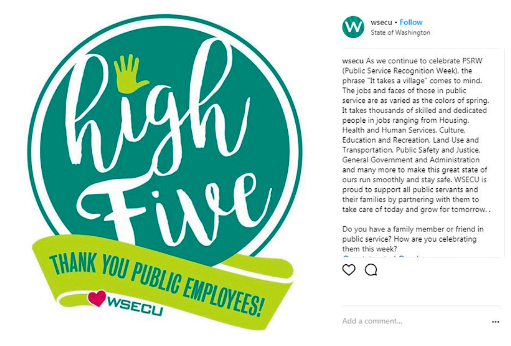
I hope your marketing plan is ready for the real spring to begin! But May is so much more than that!
In May, we celebrate Kindness to Animals, Asian American Pacific Islanders Heritage, and so much more!
- May 1 – May Day
- May 3 – World Press Day
- May 4 – Star Wars Day
- May 5 – Cinco De Mayo
- May 9 – Europe Day
- May 12 – Mother’s Day
- May 22 – Bitcoin Pizza Day
- May 23 – Buddha Purnima
- May 27 – Memorial Day
💡 Marketing campaign idea: Show some love to your night-shift live-chat operators, customer success experts, as well as customers who may be a little too close to the graveyard shift on National Night Shift Worker’s Day on May 8. After all, employee engagement and satisfaction are just as important for a successful business as ROI and direct profits!
June
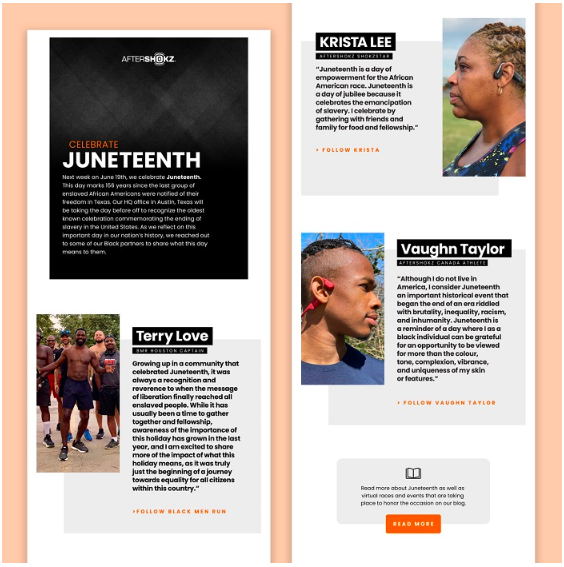
June is the perfect time to revisit your content marketing calendar, take a hard look at your marketing campaigns’ performance, and tweak things up a little if you’re not up to speed.
June is, of course, the Pride Month, but it’s also dedicated to Children’s Awareness and Effective Communication, among other important causes.
- June 1 – International Children’s Day
- June 5 – World Environment Day
- June 8 – World Oceans Day
- June 9 – Race Unity Day
- June 14 – Flag Day in the United States
- June 16 – Father’s Day
- June 19 – Juneteenth
- June 24 – Midsummer
- June 30 – Social Media Day
💡 Marketing campaign idea: June 21 is International Day Of Yoga, that comes with plenty of marketing and branding opportunities! You can start by having an online or in-house practice for your team. But also, as long as your niche allows, this can be a perfect chance to offer discounts and promotions for some of your products (like scented candles, yoga mats and blocks, pilates equipment, or online classes, workshops, and certified coaching programs!)
July
Q3 may be the slowest season for some marketers, but it only means it’s a perfect opportunity for you to spend a little extra time reconnecting with your target audience, getting close with your team members from different marketing departments, and refocusing on your business objectives.
- July 1 – Canada Day
- July 4 – Independence Day in the United States
- July 16 – AI Appreciation Day
- July 17 – World Emoji Day
- July 20 – Vassa (Buddhist Lent)
- July 30 – International Day of Friendship
August

Try revisiting your marketing budget, analyzing valuable customer data, publishing blog posts, and investing in search engine optimization during the still-kinda-slow month of August.
August is Back to School Month.
- August 5 – Blogger Day
- August 8 – Digital Nomad Day
- August 10 – Garage Sale Day
- August 22 – Be An Angel Day
- August 23 – Cheap Flight Day
- August 26 – Women’s Equality Day
💡 Marketing campaign idea: August 4 is American Family Day (and also a Sunday). Why not boost your engagement rates during this slow season and send some friendly communications to your subscribers via email or social media, listing all the fun things they could do this weekend (and how your product could help them enjoy their family time even more?)
September
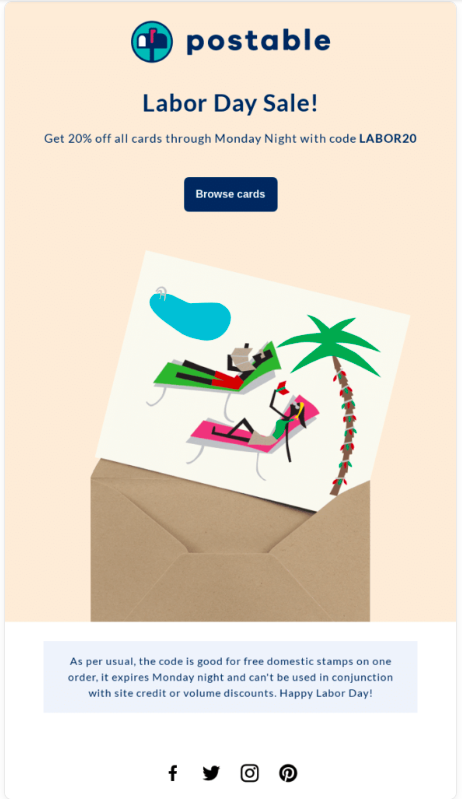
Try to focus on social-oriented activities as well as typical marketing projects this month.
September is commonly known as the Hispanic Heritage month and Global Company Culture month.
- September 2 – Labor Day in the United States
- September 4 – Global Talent Acquisition Day
- September 5 – International Day of Charity
- September 13 – Friday 13th
- September 21 – World Peace Day
- September 29 – World Day Of Migrants And Refugees
- September 30 – International Podcast Day
💡 Marketing campaign idea: A good company knows how important it is to stand behind a dedicated cause and give back to its community. International Day of Charity is on September 5, and it can be an excellent opportunity for you to give back to your community, but also to remind your customers that they can make a difference, too!
October

October is D-Day for marketers. The team members responsible for Black Friday and holiday sales are lining up their marketing activities for the most important quarter of the year. And there’s nothing that helps you stick to your marketing plan better than an annual calendar.
- October 5 – World Teacher’s Day
- October 6 – Inbox Zero Day
- October 10 – World Mental Health Day
- October 12 – Jom Kippur
- October 15 – World Students’ Day
- October 24 – United Nations Day
- October 31 – Halloween
💡 Marketing campaign idea: You’re likely already working on your Halloween and Thanksgiving campaigns at this point, so our advice here is to take things slow and allow yourself and your customers to unwind a little. Choose one of the holidays that won’t push products but will simply make your day a little lighter, such as World Statistics Day on October 20.
November
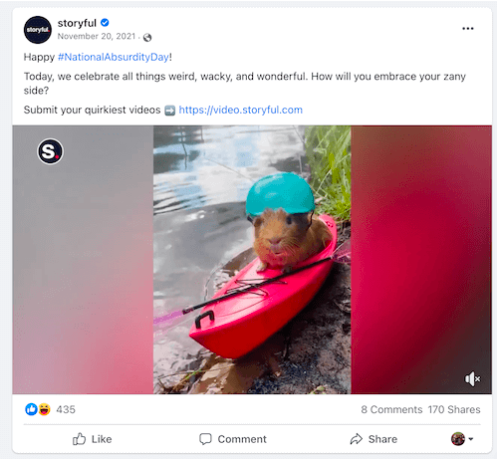
You’ve just finished your Halloween campaign, but your marketing content marketing calendar template looks fuller than ever? It’s because November is, by far, the busiest month for marketers!
And it’s not just Movember, my friends. In November, we also acknowledge all the small businesses and Native American Heritage.
- November 1 – All Saints’ Day
- November 2 – Day of the Dead
- November 5 – Guy Fawkes Night
- November 9 – World Freedom Day
- November 16 – Yi Peng Lantern Festival
- November 22 – Chiang Mai
- November 28 – American Thanksgiving
- November 29 – Black Friday
💡 Marketing campaign idea: November 20 is National Games & Puzzles Day. Gamify your BFCM offers, send out riddles that will lead to promo codes and secret offers, and go all in. Now is the time!
December
December is the most wonderful time of the year, the Month of Giving, and the Universal Human Rights Month.
But also, it’s the time when we analyze all our marketing efforts this year and make plans for the future.
- December 1 – World AIDS Day
- December 2 – Cyber Monday
- December 6 – Saint Nicholas Day
- December 14 – National Free Shipping Day
- December 21 – Winter Solstice
- December 24 – Christmas Eve
- December 25 – Christmas Day
- December 26 – Boxing Day
- December 31 – New Year’s Eve
💡 Marketing campaign idea: Between all the typical December holidays like Ugly Sweater Day, Santa’s List Day, and Gingerbread Decorating Day, it’s very easy to lose the main goal of the holiday season: giving. So instead, we encourage you to focus on what matters and participate during International Volunteer Day on December 5 to make our world a little bit better – as a team, as a company, and as a brand!

300+ occasions to impress your customers and connect with your team
Now is the perfect time to get your own free copy of our brand-new marketing calendar!
How marketing calendar templates work
I hope by now you’re persuaded that marketing calendars should be an essential and integral part of your marketing strategy. And, probably, you are wondering how to get the ultimate marketing calendar that would do all the work for you.
So let’s talk about calendar planning a little. After all, it’s not enough to have holidays laid out in front of you – it’s what you choose to create around them that counts.
Well, while there are plenty of templates for you to assign all of your marketing projects to, stop for a second and ask yourself this: what do I want to achieve by creating a marketing calendar?
After all, social media marketing managers, EB specialists, and content marketers – all can benefit from having an annual overview of the most significant holidays at hand.
Then how come there isn’t a single works-hundred-percent-of-a-time marketing calendar template?
And I tell you why by using one of the most dead-bit (yet nonetheless very true) marketing catchphrases of all times: because each case is different.
There are simply too many variables to track!
- industry
- niche
- geography
- traditions
- religion
- product
These are at the top of the demographic iceberg you’d need to conquer if you tried to create a one-size-fits-all marketing calendar. Hence, there are many different ones instead.
Types of different marketing calendars
Let’s quickly review the most popular calendars you’ve probably browsed online already.
Annual marketing calendar template

Basic annual calendars and planners provide a solid overview of your goals and achievements for the whole year.
They are particularly popular at the start and the end of the year, but you won’t really feel like coming back to your annual planner every once in a while to see whether you’re on the right track or not.
Marketing managers use them to set goals for other team members and track results. But most of your work will be done elsewhere.
Content marketing calendar template
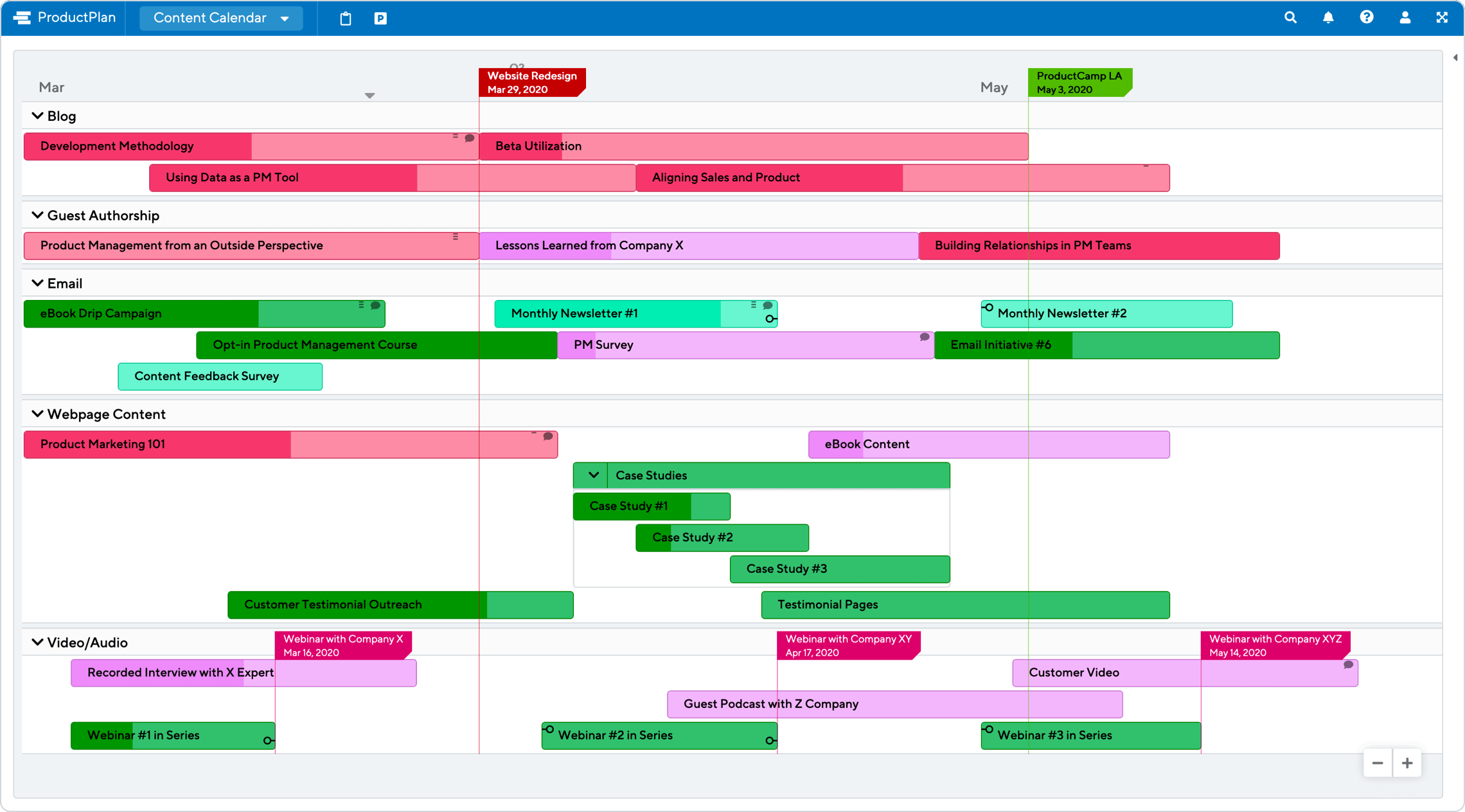
Similarly to project management marketing calendars, content templates help you map out the strategy long-term and track it along the way.
You don’t have to limit yourself with a specific timeframe here, as your content marketing plan calendar can be daily, weekly, monthly, or quarterly.
This calendar template is perfect for aligning your content team with other marketing team members for dedicated campaigns or events.
Editorial calendar template
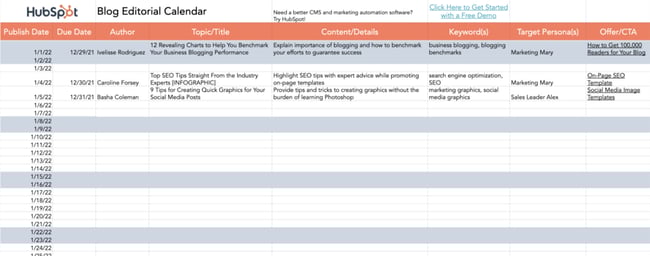
Editorial marketing calendar is a niche version of the content planner but is a little bit robust.
If the previous calendar template mainly provided the project overview and assigned roles to each task, the editorial planner explains how’s and why’s as well.
Creating a marketing calendar like this is often difficult and time-consuming, but it provides you with an excellent insight into the business strategy behind all your marketing activities.
Social media marketing calendar template

This is the most popular type of marketing calendars. After all, social media is the best way for a brand to connect with its target audience and use all of the occasions highlighted inside.
You can use your social media marketing calendar to track the important dates or to write down your campaigns – either way, it is an irreplaceable support in business profile management these days.
Where to get a marketing calendar template
Before I tell you to download the best free holiday marketing calendar of all time, let’s see what other options you have here.
Use Apple, Mac, or Google Calendar
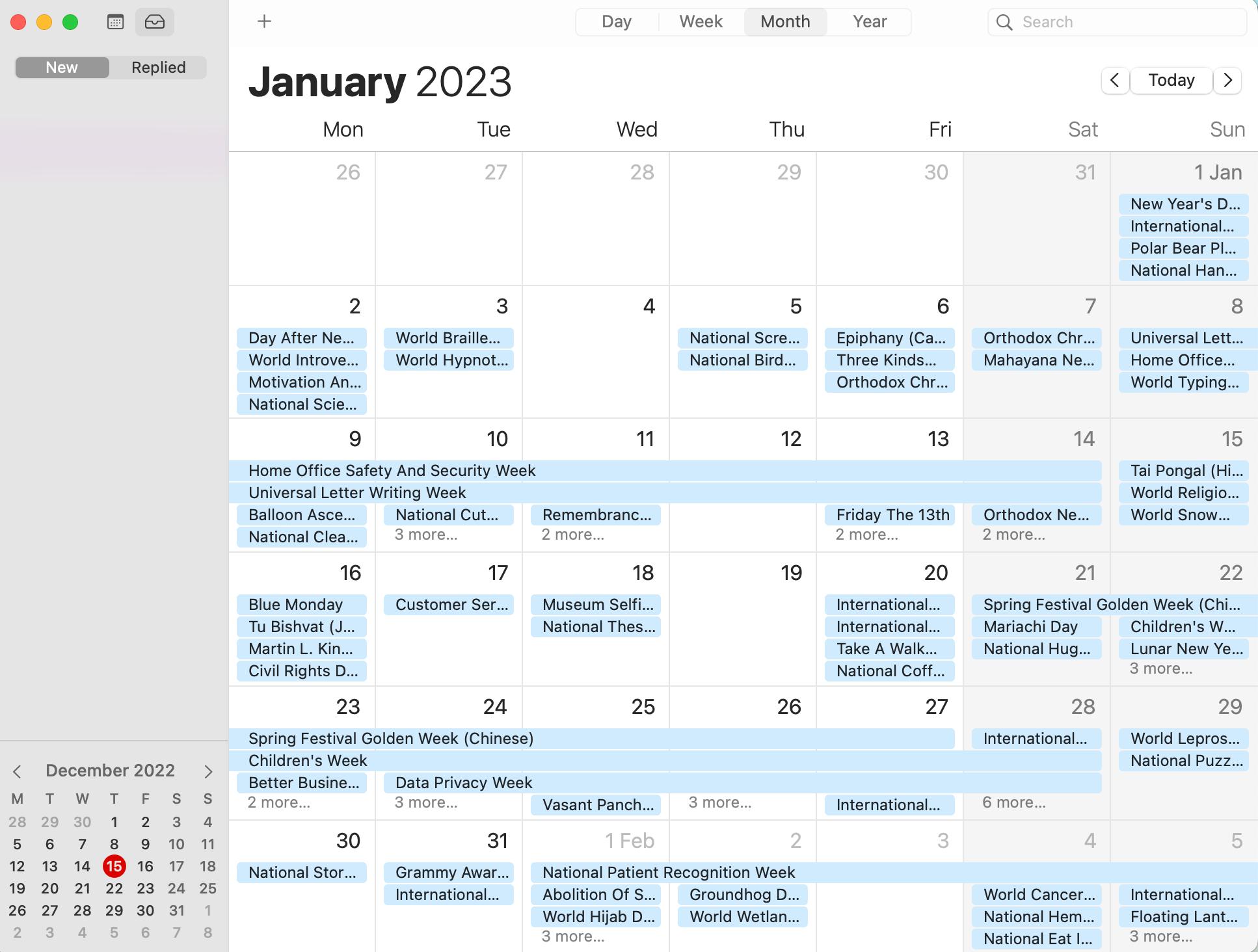
Personally, I find this form of event-tracking a little intrusive, but it does seem to work well for many people.
By adding all the holidays straight to your work calendar, you can rest assured you’ll them at hand wherever you go at all times.
It’s easy to set up, seamless to integrate, and you can even share it with others, so there’s a social element to that as well.
Try the marketing calendar template available in Google Sheets
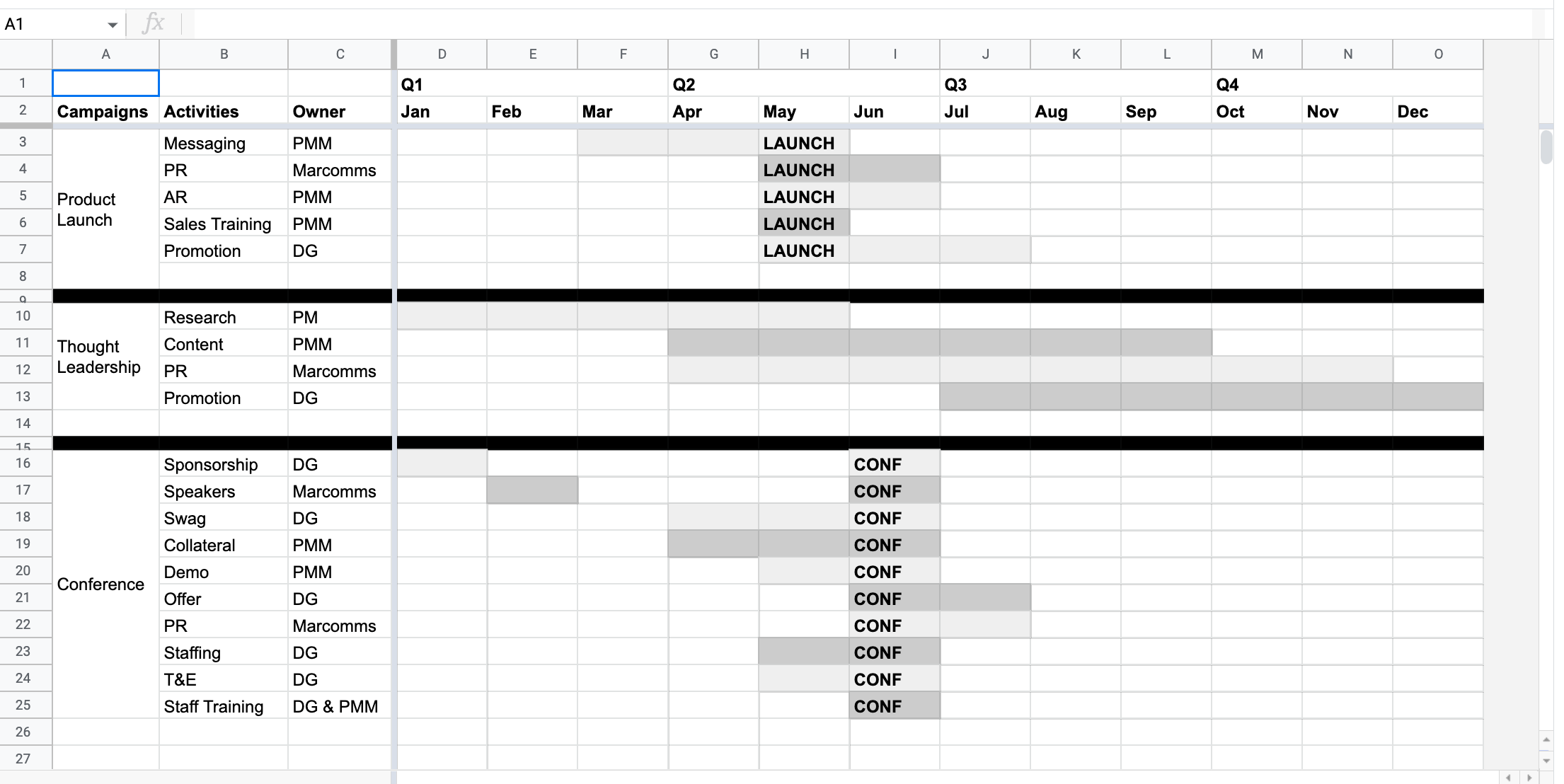
Google does a really good job when it comes to minimalist premade templates.
Of course, their marketing calendar template doesn’t feature any global holidays (you might have to add those yourself if you need them).
Yet, if you’re simply looking for a powerful campaign planner – this is the perfect solution!
Rely on an online marketing calendar tool
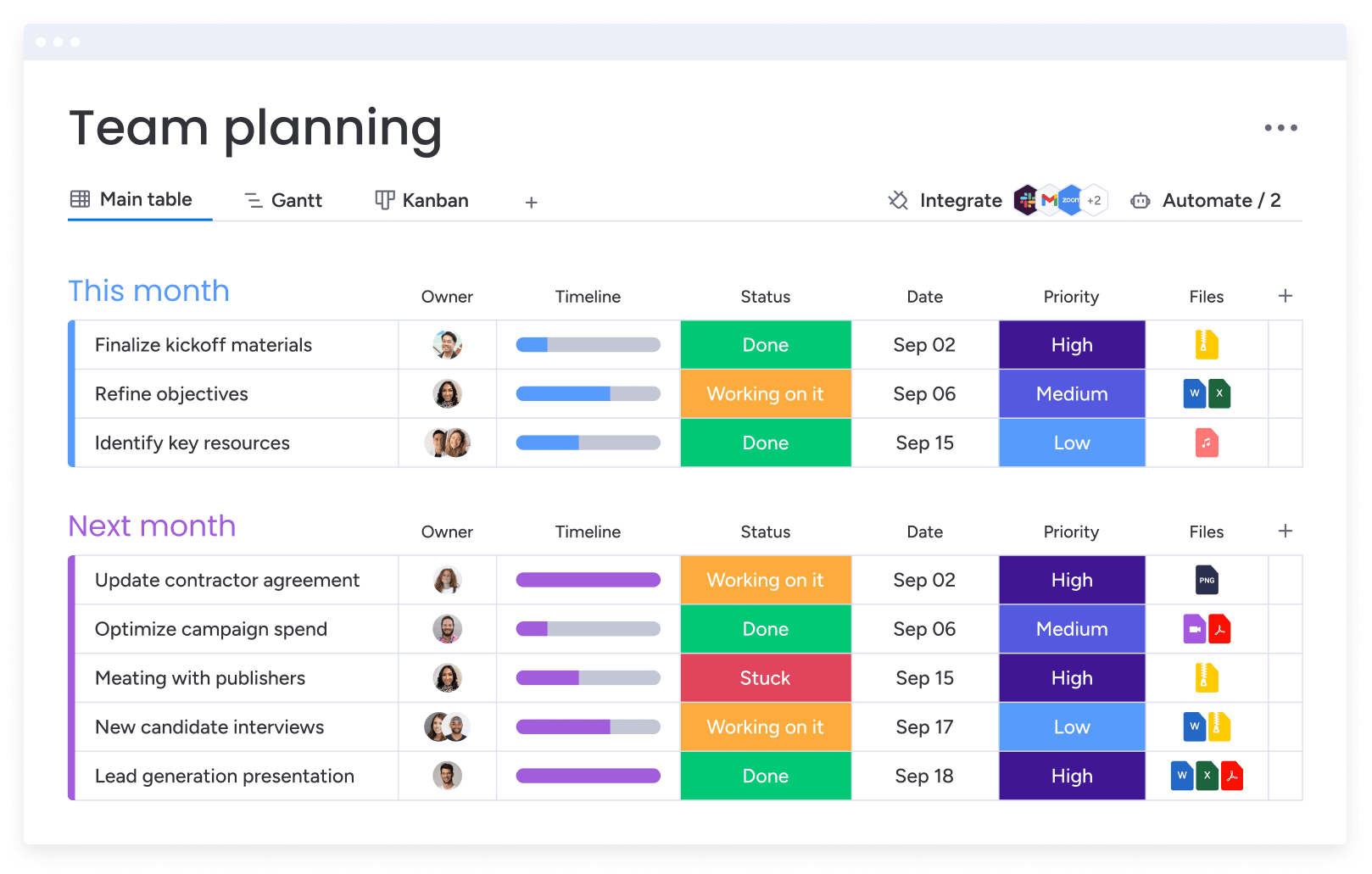
If you’re a fan of all things digital, you’re in luck! Because nowadays, there are tons of dedicated marketing calendar apps and templates you can edit in real time. Take this monday.com example, for instance.
It’s sleek, modern, easy-to-navigate… More importantly, it lets you synchronize all your activities with your team – what’s more to wish for?
Well, there is one thing. It doesn’t come pre-filled. This means that you will have to manually select meaningful dates to build your campaigns and events around.
So, similarly to the Google Sheets template, it’s more of a planner rather than a calendar.
Which brings us forward.
Download Global Marketer’s Calendar ’24

You won’t find a more detailed calendar online. It’s not just bragging.
Because the Global Marketer’s Calendar is everything you could’ve dreamed of and more! I’m taking:
- 300+ global and diverse marketing opportunities
- pre-filled monthly and quarterly spreads with campaign examples
- expert tips and advice on how to excel at marketing in 2024
- semi pre-filled marketing campaign planner to help you save time
- the version is supported both in PDF and print formats, so you can go between digital and analog as your heart pleases
With this marketing calendar tool at your service – you’ll be unstoppable this year!
So, what are you waiting for?